Dedicated standby team
Personnel allocated to the rescue task, with roles and staffing shaped around the space, access and foreseeable rescue scenarios.
Dedicated rescue provision · United Kingdom
Dedicated rescue teams, equipment and task-specific rescue planning for UK industrial sites, shutdowns, maintenance and infrastructure projects. Ready before entry begins.
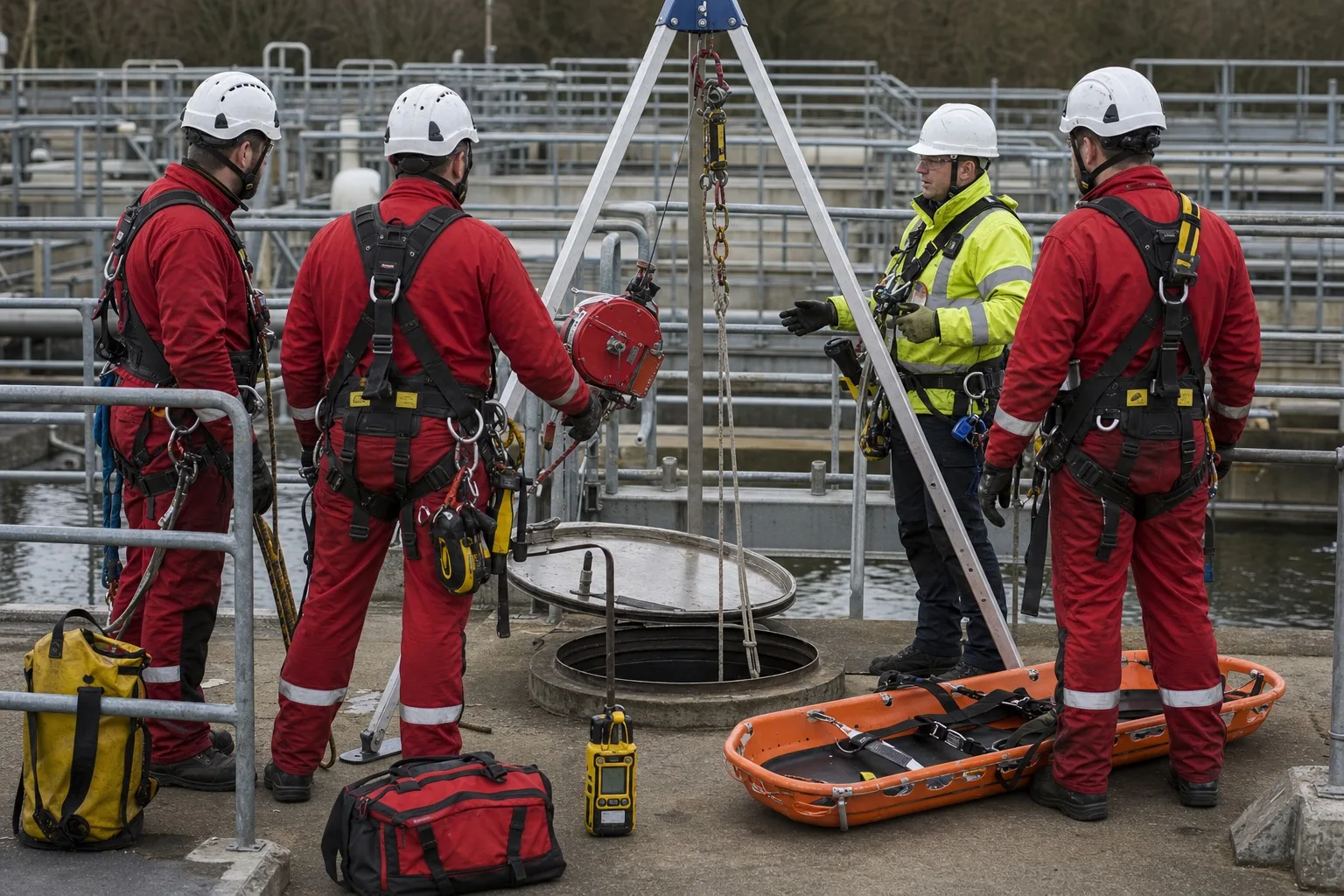
People ready. Equipment prepared.
When your team enters a confined space, the rescue arrangements need to be ready—not something to establish after an incident.
CritiCall provides dedicated confined-space rescue standby for site managers, principal contractors, engineering teams and shutdown planners. We bring the team and rescue equipment to the task, with a clear plan for the space and the work taking place.
Our role is practical: understand the entry, prepare the response and maintain rescue readiness throughout the covered activity. We work alongside your site team and permit arrangements so everyone understands how an alarm will be raised and what happens next.
Personnel allocated to the rescue task, with roles and staffing shaped around the space, access and foreseeable rescue scenarios.
A practical plan for raising the alarm, reaching the casualty, removal from the space and onward medical care.
Rescue and casualty-handling equipment selected for the job, positioned and checked before work starts.
Clear contact with the permit holder, entry-control personnel, contractors and the people managing the work.
A team built around the task
The space and rescue method determine the team—not a standard headcount applied to every job.
We define the personnel and equipment needed around the access, hazards and casualty-removal route. Rescue supervision, standby positions and contact with entry-control personnel are established before the work begins.
The equipment specification follows the rescue plan, including the means of access and retrieval, casualty packaging and handling, communications and medical care. Respiratory protection and atmospheric monitoring needs are addressed during task planning, with responsibilities clearly allocated.
Tell us about existing site resources and any specialist equipment already in place. We identify what the rescue team will supply and what remains part of your site’s provision.
More than a generic document
A useful rescue plan explains how the team will reach, treat and remove a casualty from this particular task.
We review the work information with the responsible site parties, including access, foreseeable emergencies and the conditions rescuers could encounter. Vertical entries, horizontal routes and restricted openings each need their own consideration.
The plan connects rescue activity with your permit-to-work system, isolation arrangements and emergency contacts. The contractor and site management retain responsibility for authorising entry and controlling the work.
Entry dimensions, internal layout, vertical or horizontal access and the route a casualty would need to travel.
The task, number of entrants, duration, changing conditions and other activity that could affect the entry.
The client’s risk information, atmosphere, isolation arrangements and any conditions affecting rescuers or casualties.
Team roles, equipment, communications, casualty handling, safe access and the point of medical handover.
HSE guidance states that reliance on the emergency services alone is not sufficient. Rescue arrangements must be appropriate to the work, with notification of the emergency services when needed. Read HSE’s confined-space guidance →
Throughout the task
Dedicated rescue personnel remain available for the covered entry, rather than being diverted into unrelated site duties.
Changes to access, work, conditions or permit status are communicated through the site’s agreed routes. Shift handovers preserve the information the incoming team needs to maintain the standby post.
Review the task and space, agree the rescue provision and position equipment.
Confirm roles, alarm routes, communications and contact with the site team.
Keep the rescue team available while the covered work takes place.
Put the rescue plan into action and provide casualty care if an incident occurs.
Coordinate onward care and close or transfer the standby post through the site’s arrangements.

Rescue & casualty care together
Plan for the person who needs help—not only the route out of the space.
We provide FREC 3, FREC 4, technician and paramedic options alongside rescue standby. The clinical team and equipment reflect the task, anticipated casualty needs and attending personnel’s authorised scope.
Medical contact routes, the casualty handover location and access for an ambulance are established with the site team. Additional ambulance transport is available separately through a CQC-registered partner.
Fire cover can also be booked alongside rescue standby for hot works and higher-risk activity. Dedicated roles and staffing are defined so one incident does not leave another standby task uncovered.
Spaces, sites & projects
Inspection, cleaning, engineering and maintenance work can each introduce different rescue needs. We plan the provision around the actual space and task, not its name alone.
Rescue standby during inspection, cleaning and maintenance of enclosed plant.
Cover for restricted-access work in industrial and utility settings.
Task-specific rescue provision around the space, materials and work taking place.
Standby for confined-space tasks at treatment facilities and associated infrastructure.
Dedicated rescue teams alongside engineering, inspection and maintenance work.
Shift-based provision for planned entries and changing work programmes.
Single tasks to extended projects
Discuss day, night and multi-shift cover for planned entries, maintenance and shutdowns.
Send the task information early so we can establish the rescue scope, people and equipment. Where several entries or work fronts run together, we review the staffing and standby positions for each rather than treating one team as unlimited cover.
Before you book
A dedicated rescue team, task-specific rescue planning and rescue equipment for the agreed work. We establish the team’s roles, communications and readiness with your site representative before the covered entry begins.
The team size follows the space, hazards, entry arrangements, rescue method and number of simultaneous tasks. We size the rescue team to deliver the entry and rescue plan throughout the task.
Yes. The rescue team coordinates with your permit holder, contractors and entry-control personnel so rescue arrangements reflect the actual task. Permit issue, isolations and control of the work remain with the responsible site parties.
Yes. We provide FREC 3, FREC 4, technician and paramedic options alongside rescue provision. Clinical equipment is matched to the attending team. Additional ambulance transport is available separately through a CQC-registered ambulance partner.
Yes. Discuss single-task, shift-based and extended standby, including nights and weekends. Crew changes and equipment readiness are organised around the work programme and periods when entry is taking place.
HSE guidance states that relying on the emergency services alone is not sufficient for confined-space emergency arrangements. The rescue provision needs to reflect the space and task before work begins, alongside arrangements to notify the emergency services when needed.
Send the site, dates, shift hours, task description, space layout or photographs, entry dimensions, entrants and existing risk assessments, permits and rescue information. Include known hazards, access restrictions and other work taking place nearby.
CritiCall provides independent rescue standby within the agreed task scope. Site management and contractors retain responsibility for the work and safe entry; statutory emergency services are notified and involved when required.
Tell us about the task
Share your site, dates, space details and the work taking place. We will help define the dedicated rescue team, equipment and standby arrangements for your project.