Manufacturing plants
Temporary fire cover for production areas, process buildings and periods of maintenance or change.
UK industrial fire protection
Supporting industrial facilities, shutdowns, maintenance projects and commercial premises with specialist temporary fire cover, rapid emergency response and business protection capability.
Protection while normal arrangements change
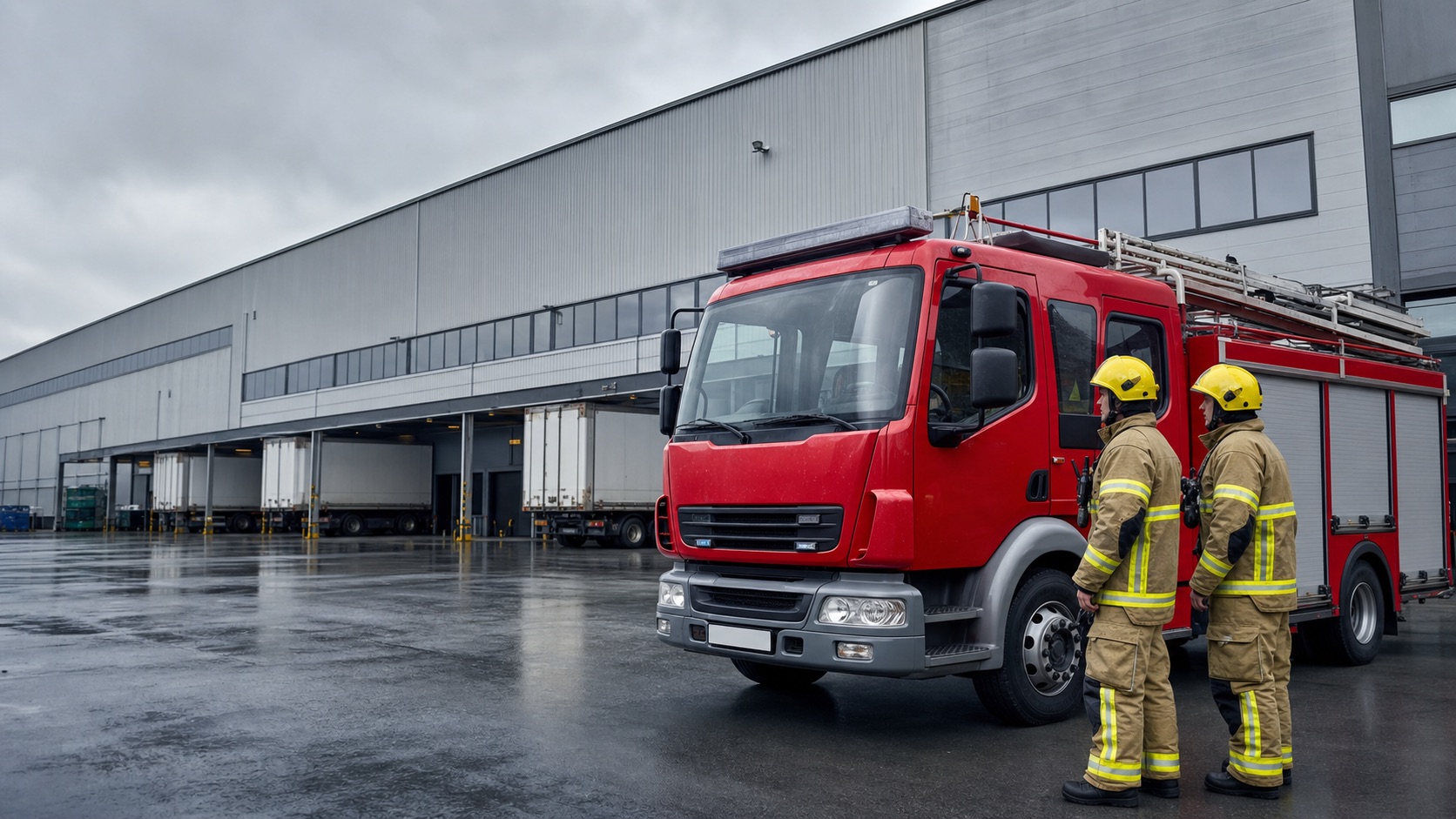
CritiCall provides temporary fire crews and appliances for factories, manufacturing plants, warehouses, logistics sites and commercial premises across the UK.
Cover can be established during shutdowns, maintenance periods, building work or higher-risk activity. It can also protect a site when its normal fire arrangements are temporarily reduced, giving management an on-site response while essential work continues.
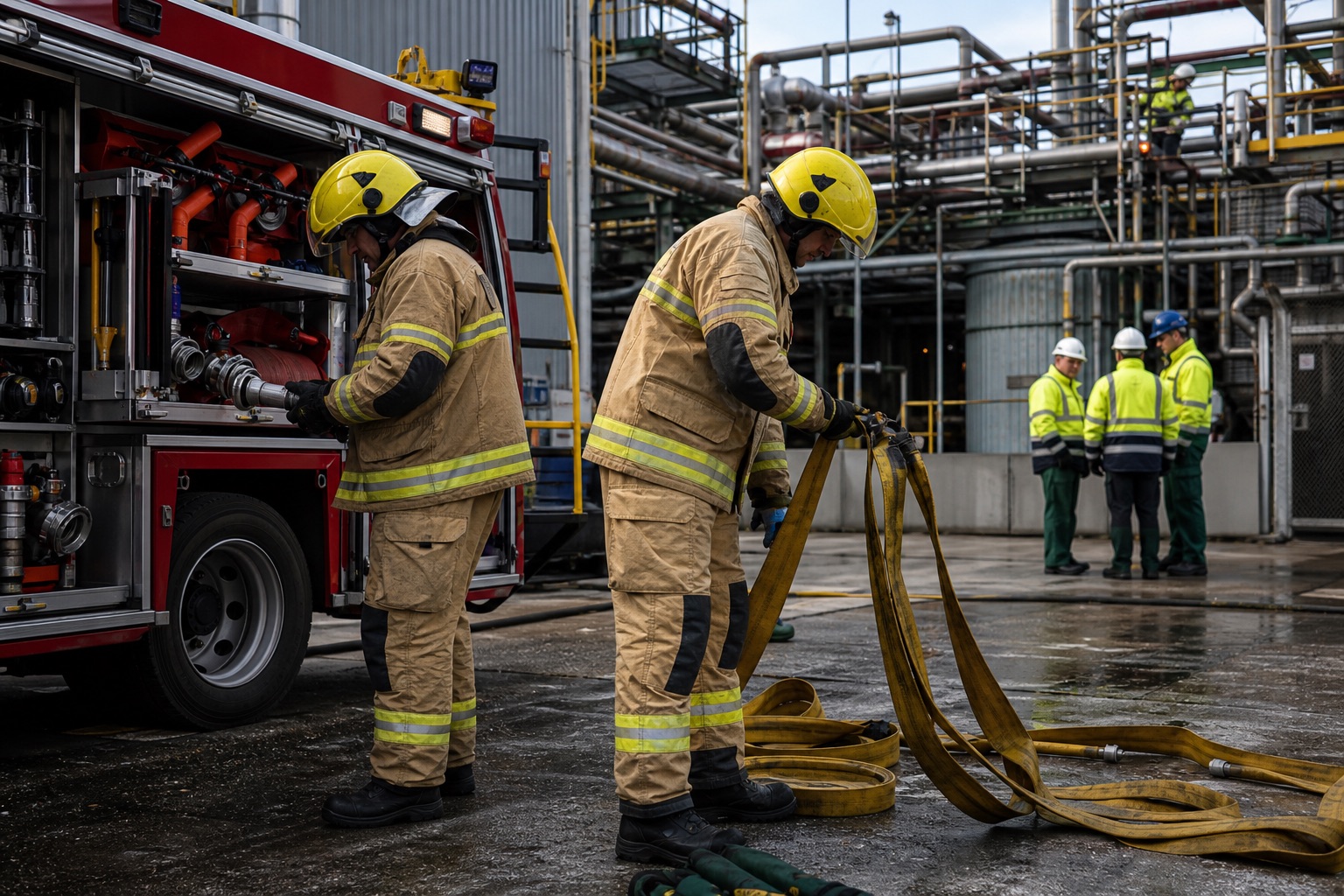
The service is matched to the facility. Building size, process hazards, storage, access, water supplies, working hours and the tasks taking place all influence where personnel and equipment are positioned. Crews become familiar with the site before taking post and maintain contact with the nominated site representative throughout the period of cover.
Temporary fire provision may include a fixed post, patrols or a combination of resources across several areas. The objective is early intervention, clear escalation and practical protection of people, premises and business-critical activity.
On-site business protection
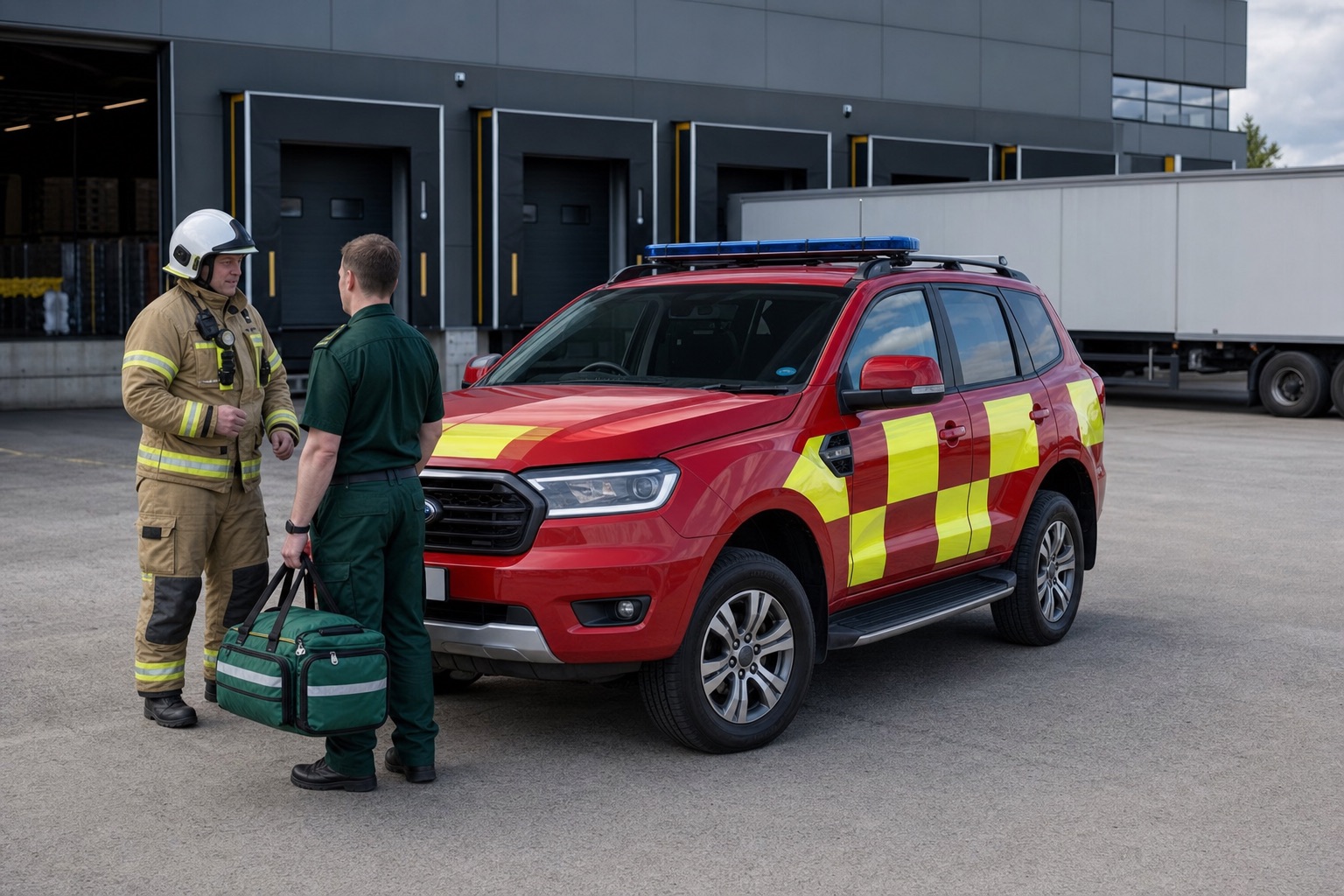
A Business Protection Response Unit places a compact rapid-intervention vehicle and trained responders on site, ready to deal with the first critical minutes of a fire, medical emergency or developing incident.
The unit can provide immediate fire response, initial fire suppression, casualty care and incident stabilisation. Personnel with appropriate firefighting skills and FREC 3 or FREC 4 training can assess the situation, begin treatment within their competence and pass clear information to site management and incoming statutory services.
This resource supports business continuity by reducing the time between an incident being identified and practical help reaching the scene. Its smaller footprint can suit warehouses, logistics centres, industrial estates and commercial campuses where fast movement around the site matters.
The unit does not replace NHS ambulance services or the statutory Fire and Rescue Service. Where external attendance is required, responders raise the alarm through the site's agreed route, maintain access and support the handover on arrival.

Rescue readiness throughout the task
Work inside tanks, vessels, chambers and other confined spaces needs a rescue provision that can be activated immediately. CritiCall can provide a dedicated standby team, suitable rescue equipment and practical preparation for the agreed entry task.
Before entry begins, the team reviews the space, access, likely rescue route and information provided through the permit-to-work system. Retrieval equipment, breathing or respiratory equipment where required, communications, casualty handling and access for onward care are positioned around the job.
The standby crew remains available throughout the entry rather than being drawn into unrelated duties. Entry-control information and contact with the permit holder help the team maintain awareness of who is inside, the work taking place and any change that could affect rescue readiness.
Rescue planning is kept usable. The people at the access point understand how an alarm will be raised, which route the rescue team will use and how the casualty will be transferred once removed from the space.
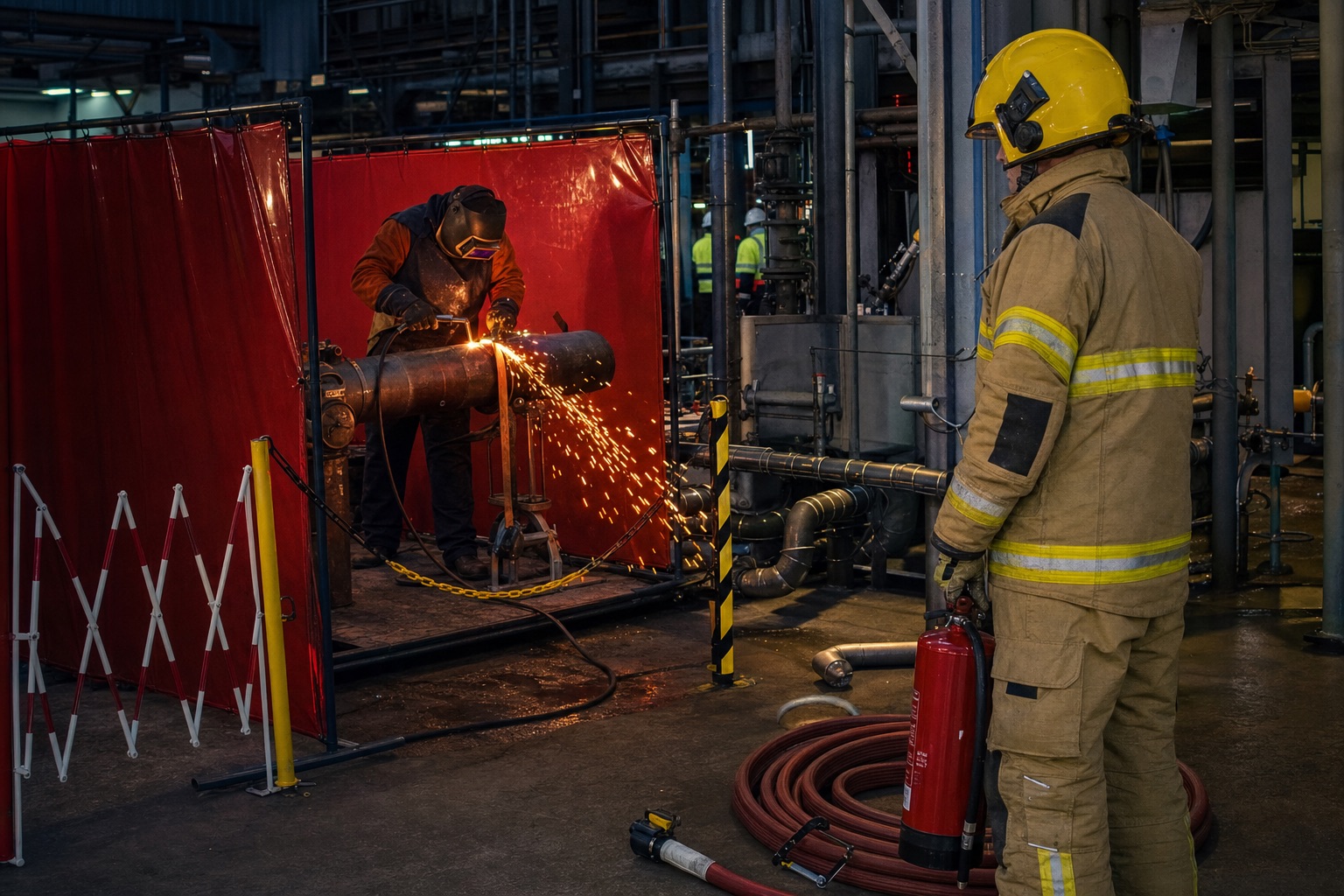
Fire watch for ignition hazards
Welding, cutting and grinding can project heat and sparks beyond the immediate work area. Roofing operations, tank work, fuel transfer and some maintenance tasks can create their own combination of ignition sources, combustible materials and restricted access.
CritiCall can provide temporary fire watch and standby crews for authorised work. Personnel check their post, understand the task and remain equipped to intervene if heat, smoke or fire develops. Cover can continue through agreed cooling and monitoring periods after the work stops.
The fire team works alongside the site's permit controls without taking ownership of the contractor's activity. Access, extinguishing media, water supplies, isolation information and the route for stopping work are confirmed with the responsible site contact.
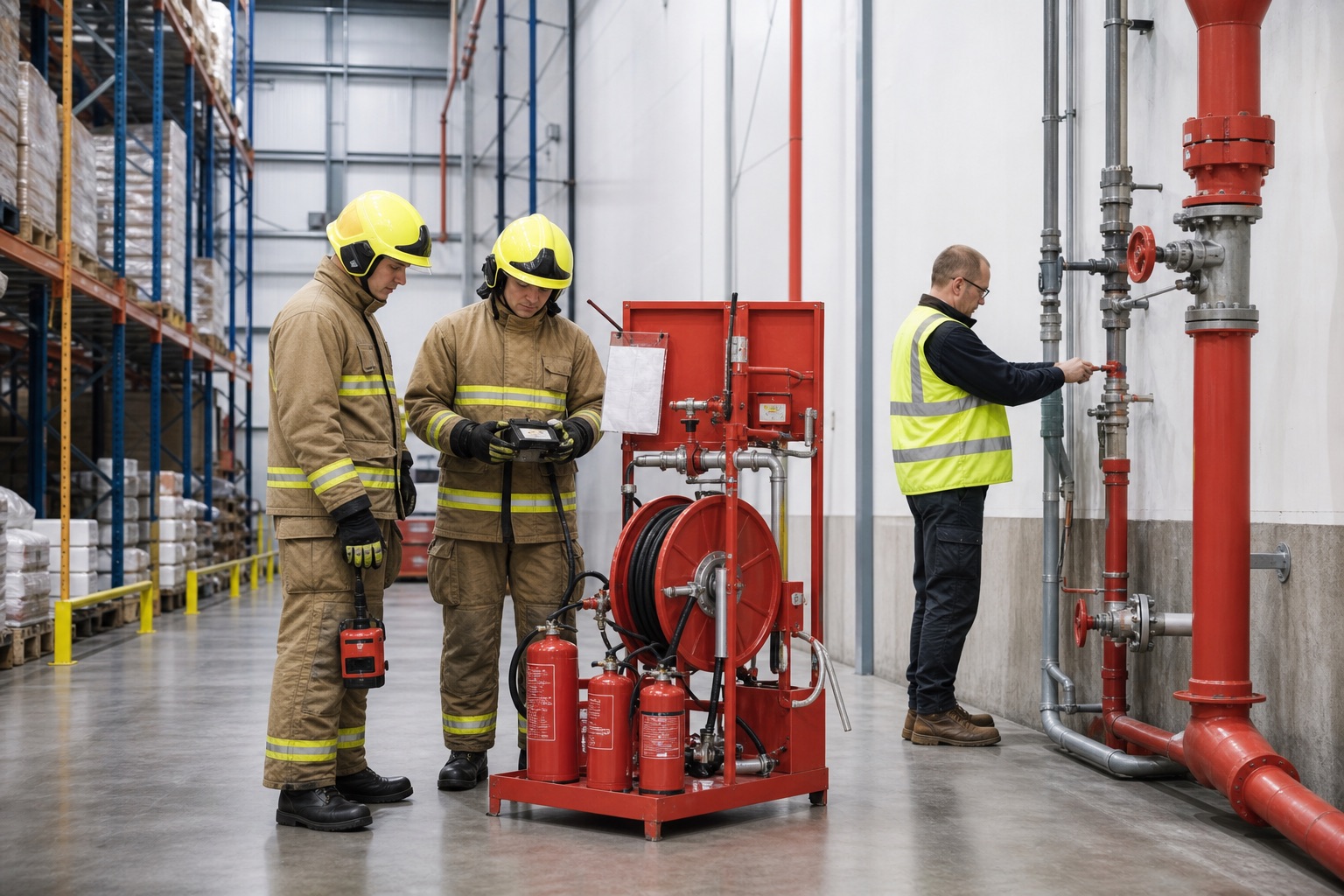
Protection during system maintenance
When sprinklers, fire alarms, hydrants or other protection systems are isolated, the building's usual response to fire may be reduced. Temporary cover can help protect the site for the duration of testing, repair, replacement or planned maintenance.
CritiCall can provide fire crews, patrols and rapid-intervention resources around the affected areas. Temporary fire points, portable equipment and contact routes are established where appropriate, with personnel briefed on the impairment and the activity continuing inside the building.
Patrol frequency and response positions reflect the facility, occupancy, duration and remaining protection. Any alarm raised through a temporary route is communicated promptly to site management and escalated to public emergency services where necessary.
Cover remains ready until the agreed stand-down point. Reinstatement of the fixed system remains the responsibility of the competent contractor and site management; CritiCall confirms only that its temporary deployment has ended.
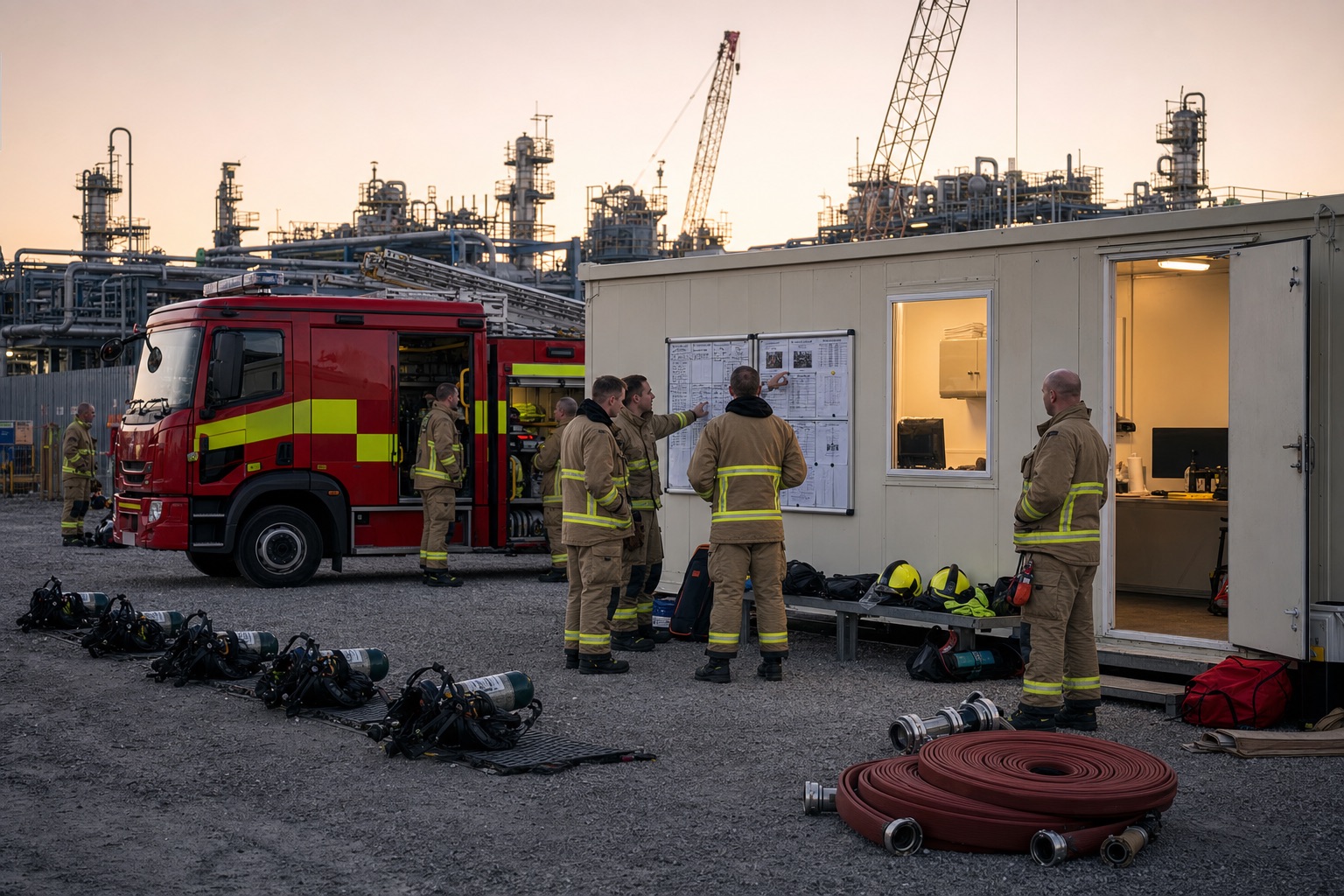
From mobilisation to handover
Major shutdowns can bring contractors, hot works, confined-space entries and changing access into the same facility for days or weeks.
CritiCall can mobilise a temporary fire station or defined response posts for the project period. Crews learn the site, process the current work information and maintain equipment so each shift begins ready to respond.
Long-duration cover depends on consistent handovers. Incoming personnel receive changes to work areas, impaired systems, access, live permits and any outstanding actions. Welfare and rest arrangements are included so the service remains sustainable across extended or continuous shifts.
As the shutdown develops, resources can move with the work while retaining emergency access and water supply. At completion, equipment and posts are accounted for, the final handover is made to the site and the temporary station stands down through the agreed route.
Sites and projects
Temporary fire cover for production areas, process buildings and periods of maintenance or change.
Fire patrols and rapid response across storage, loading and staff areas.
Cover shaped around large buildings, vehicle movements, loading bays and business-critical activity.
Fire and emergency resources positioned around busy multi-user sites and extended operating hours.
Temporary protection for offices, retail, leisure and mixed-use buildings when normal systems are affected.
Fire and rescue standby for maintenance, confined-space tasks and defined higher-risk work.
Flexible response cover across several buildings, yards and shared access routes.
Fire watch, response and rescue standby during changing phases of site work.
Site-specific provision for temporary compounds, engineering work and remote or restricted access.
A clear route to active cover
Practical protection for the site
The service is shaped around the building, activity and period of cover rather than supplied as a fixed package.
A practical approach to industrial sites, commercial premises and temporary projects.
Personnel selected around the fire, rescue and casualty-care needs of the task.
Compact rapid intervention for fire, medical and developing incidents.
Dedicated teams and equipment available throughout the entry task.
Short-duration, shift-based and longer deployments across the UK.
Positions, access, water, equipment and contact routes established before cover begins.
Start an enquiry
Share the site, dates, working hours, affected fire systems and activities taking place. We will help define the fire, rescue and emergency response provision needed.