Race circuits
Fire and rescue provision around the track, pit lane, paddock and spectator areas.
Specialist UK event provision
CritiCall provides specialist fire, rescue and incident-response cover for UK circuits, rally stages, test days, pit and paddock areas, spectator zones and temporary motorsport venues.

At a glance
Course-side readiness
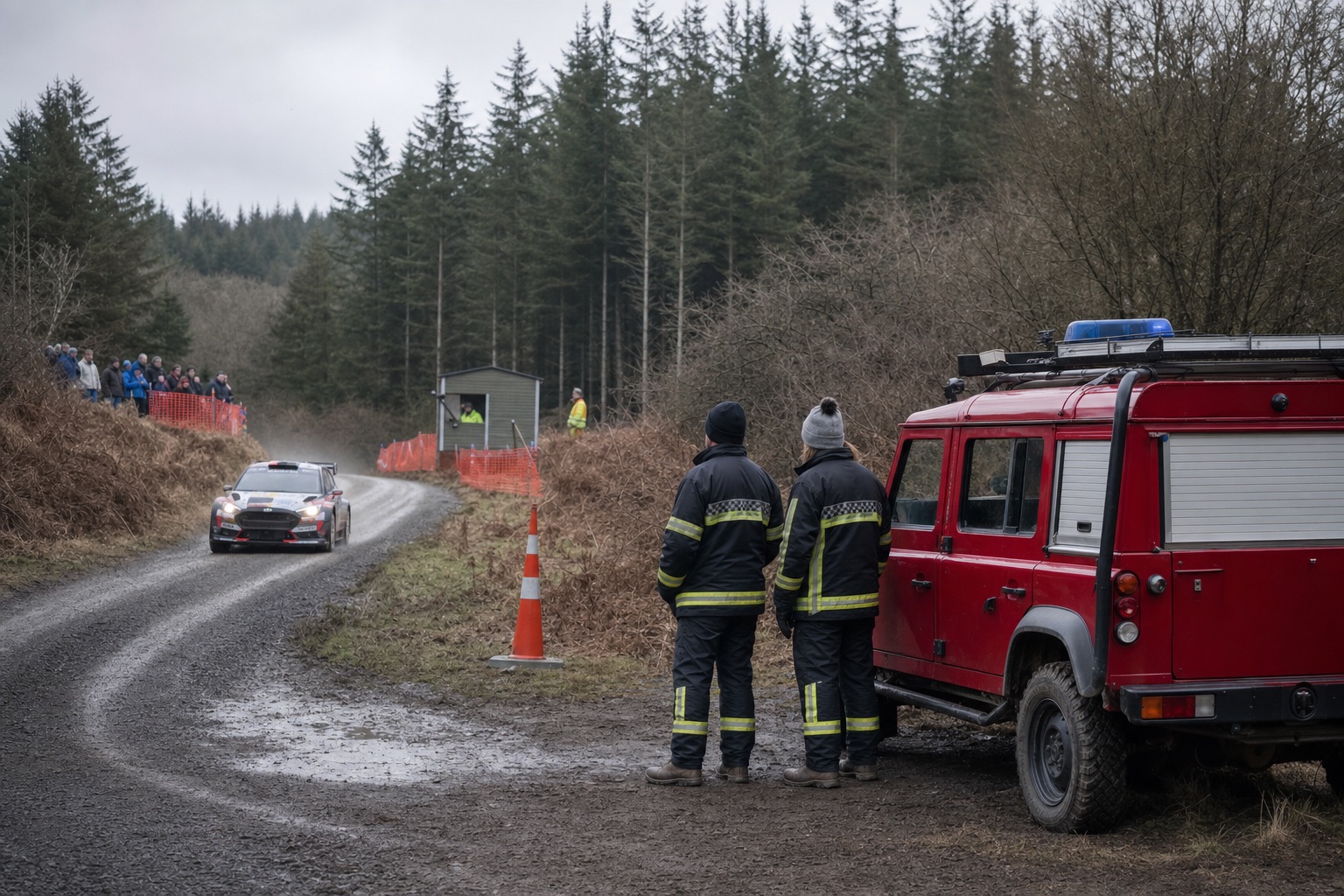
CritiCall provides dedicated crews for race circuits, rally stages, test days, hill climbs, sprints, drift events, demonstration runs and temporary motorsport venues.
The service is built around the event rather than a generic standby package. A circuit may need posts around the track, rapid access to the pit lane and separate resources for its paddock. A rally may need dispersed teams at stage access points and service areas. A hill climb, sprint or demonstration can call for targeted positions along a course where access is restricted once activity begins.
Before the first vehicle runs, crew and appliance positions are matched to credible incidents, course access, vehicle activity and the organiser's safety structure. During live activity, the team maintains contact with the nominated officials, keeps emergency routes clear and remains ready for rapid first intervention.
Cover can extend beyond the racing surface to the pit lane, paddock and service areas, where refuelling, repairs, hot components and dense vehicle movement create a different risk profile. The result is joined-up fire and rescue provision across the parts of the venue that matter.

Intervention after an incident
When a vehicle is damaged and an occupant cannot leave unaided, the response needs disciplined access, stabilisation and fire protection. CritiCall can provide vehicle-extrication and road-traffic-collision-style rescue skills for agreed motorsport roles, with the team selected around the event and vehicle activity.
Crews can assess and stabilise the vehicle, create safe access to the occupant and use appropriate rescue equipment where the confirmed deployment includes it. Fire suppression remains available during the rescue, while event officials manage the course and prevent further vehicle movements into the incident area.
The intervention is coordinated with the clerk of the course, safety officer or other nominated event lead. A concise route for information helps the response team understand the vehicle, occupant status, track condition and any immediate fire or fuel hazard before committing personnel.
Higher-risk activity, including competitive events, demonstrations and intensive test sessions, may justify dedicated resources closer to the point of activity. Positioning and access are therefore considered before running begins, not after an incident has occurred.
Track, paddock and service areas
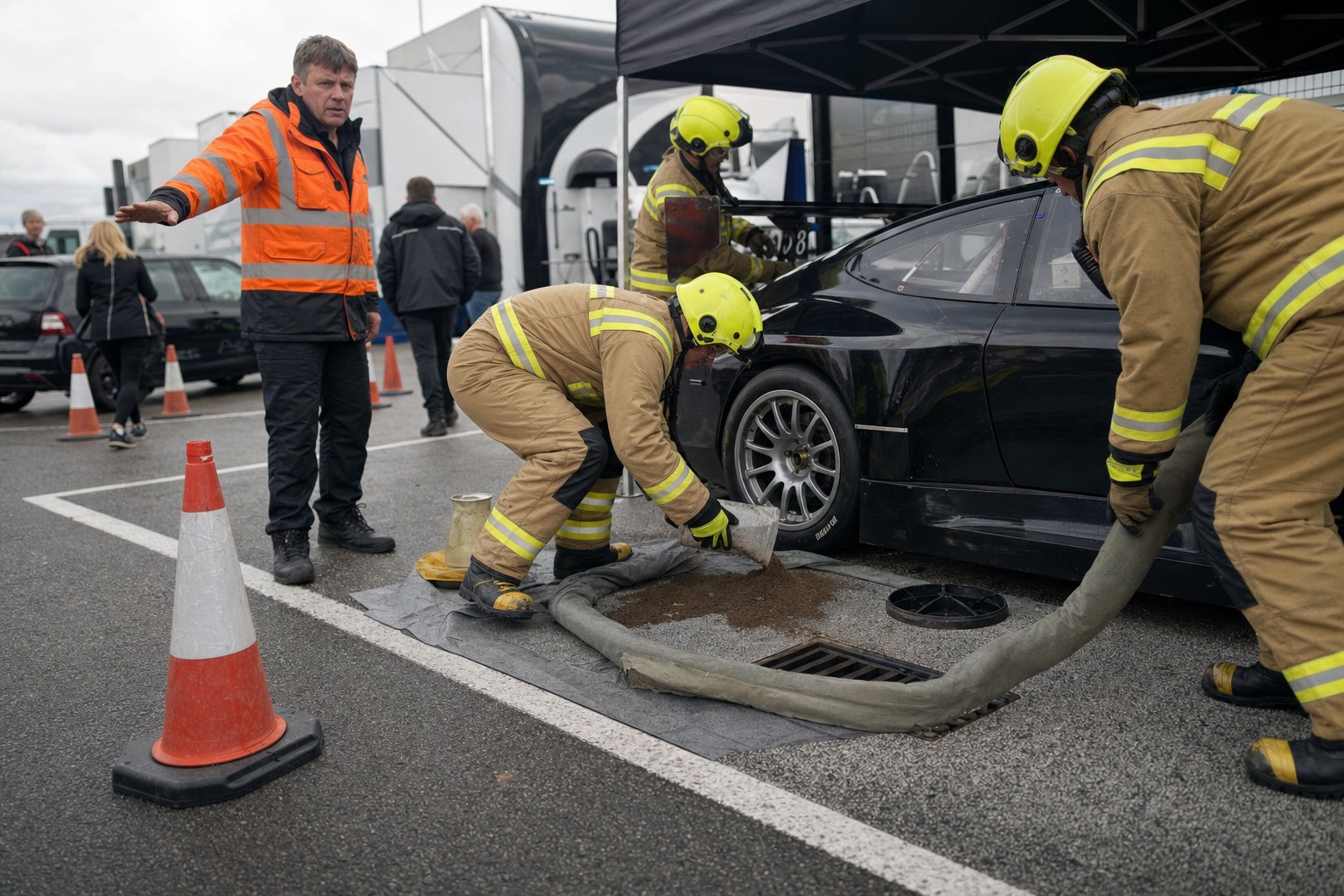
Oil, petrol and diesel can escape after a vehicle incident or mechanical failure. Even a modest spill can create a slip risk, threaten drains and delay the safe use of a track, paddock bay or service area.
CritiCall crews can establish a safe working area, stop the spread where it is safe to do so and use suitable absorbent materials, containment socks or drain covers for the confirmed task. The immediate priority is to protect people, prevent migration into surrounding land or drainage and give officials a clear view of the affected surface.
Contaminated absorbents and debris need controlled handling. We can work with the organiser on segregation, temporary containment and the route to approved clean-up or disposal. This is practical incident response; it does not claim specialist hazardous-materials functions beyond the equipment and competence agreed for the event.
Once the immediate leak is controlled, the venue remains responsible for deciding when an area can reopen. CritiCall can report what has been treated, identify remaining contamination and help coordinate further cleaning without obstructing officials or event staff.
Beyond the live course
Motorsport events bring together public areas, temporary infrastructure and large numbers of parked vehicles. The fire plan must extend beyond incidents involving competitors.
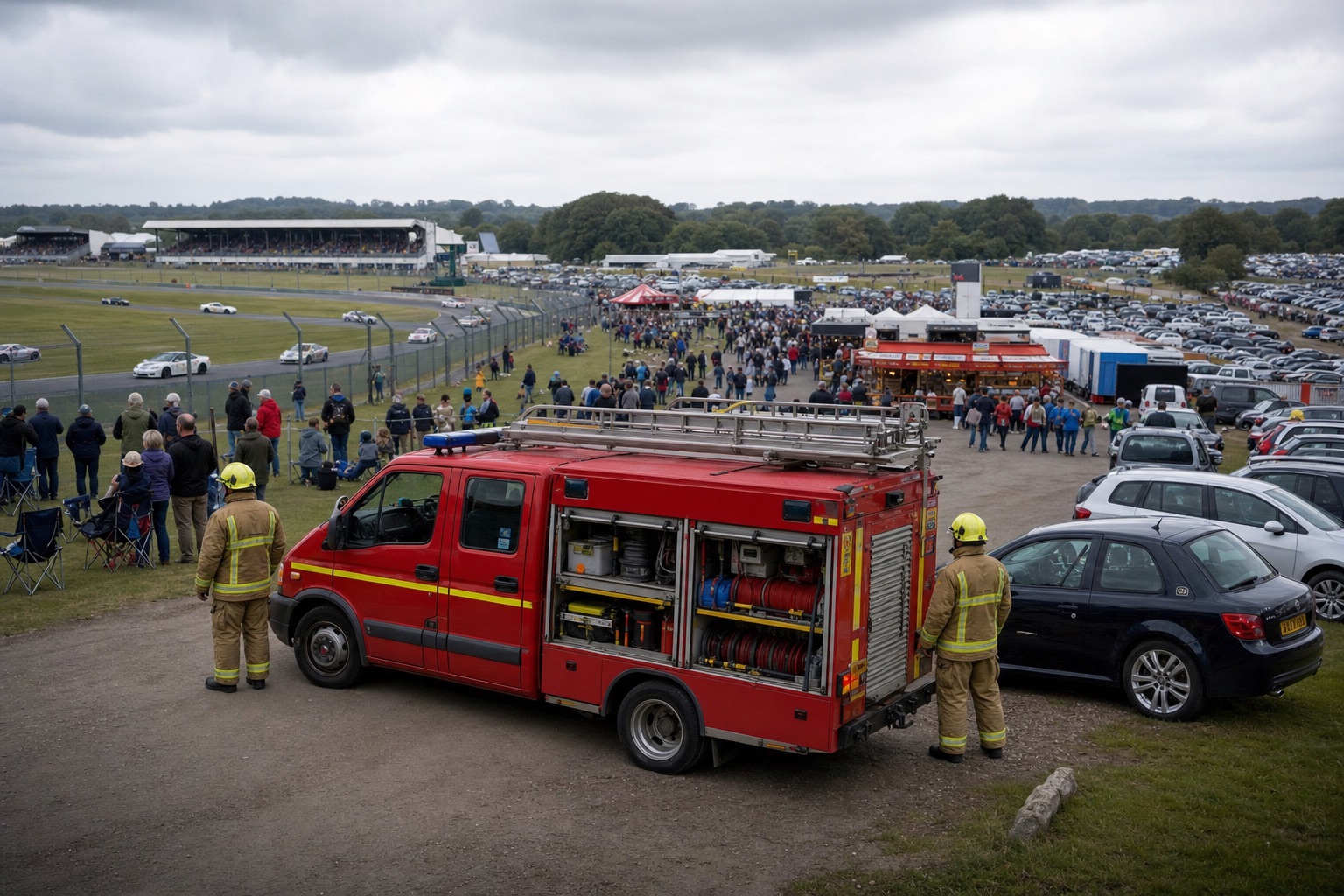
CritiCall can provide fire cover for spectator areas, grandstands, hospitality, trade villages, food concessions and temporary structures. Generators, temporary power, cooking equipment and high footfall are considered alongside the access needed by a responding crew.
Where camping forms part of the event, the provision can include those overnight areas. Appliance positions are selected to reach public zones without compromising course access, and contact with event control or venue staff allows incidents away from the track to be reported quickly.
Public car parks introduce fuel loads, tightly parked vehicles and potentially long distances from the racing surface. Dedicated or shared venue resources can be positioned to reach these areas, subject to the site layout and event brief. Electric-vehicle incidents require specific tactics and escalation; any provision is confirmed against the available equipment and venue plan rather than assumed.
Clear emergency lanes, access through spectator fencing and liaison with stewards help ensure a fire crew can reach the public-facing parts of the venue when normal movement is at its busiest.

Where vehicles are prepared
Fire provision remains important when vehicles leave the course. Refuelling, hot engines and exhausts, battery systems, repairs and tightly arranged awnings can place ignition sources and fuel close to crews, equipment and neighbouring teams.
Standby personnel can cover garages, pit lanes, rally service areas and temporary paddocks, maintaining access through busy pedestrian and vehicle routes. The team can also consider generators, compressed gases where present, authorised welding or hot works and the separation needed around fuel-handling activity.
Positioning should make the fire service visible and reachable without blocking competitors or production flow. Appliance access, hose routes, extinguishing resources and contact with the paddock or pit-lane lead are checked before the busiest periods begin.
This provision can operate alongside course-side resources or as a distinct post where the venue layout warrants it. It gives organisers a response option for incidents that develop in garages, awnings and service bays while live activity continues elsewhere.
Practical preparation
The deployment starts with the venue or route, the event format and the risks supplied by the organiser.
A permanent circuit, a multi-location rally and a temporary country-venue course cannot use the same plan. CritiCall reviews the information available, identifies the areas the service is expected to cover and agrees crew and appliance positions before activity begins.
Access and emergency routes, water supplies, pit and paddock areas, spectator zones and public car parks are considered together. The team also needs a simple route for radio or telephone contact with the nominated event officials; communications are part of delivery, not a separate sales package.
A briefing confirms roles, posts, likely incidents and escalation. Readiness checks ensure personnel, vehicles and agreed equipment are in position before the course opens. At stand-down, the organiser can confirm that activity has ended and any remaining actions or contaminated materials have been handed over appropriately.
Permanent and temporary venues
Fire and rescue provision around the track, pit lane, paddock and spectator areas.
Dispersed crews positioned around stage access, service areas and remote routes.
Targeted cover along temporary or permanent courses with restricted access and rapid vehicle movements.
Standby fire and rescue provision for private, manufacturer, club or development activity.
Fire cover around high vehicle loads, tyre heat, fuel hazards, paddocks and public areas.
Response resources for heritage, promotional or public vehicle demonstrations.
Fire provision around refuelling, repairs, generators, hot works and vehicle preparation.
Public-facing cover around grandstands, temporary structures, concessions and event infrastructure.
Fire response provision for public vehicles, overnight areas and temporary event use where required.
From brief to stand-down
Built around the event
Motorsport fire cover must reflect the course, vehicles, public areas, access routes and incident risks rather than relying on a generic event package.
CritiCall provides an integrated fire and rescue service for the areas agreed with the organiser. We do not replace the organiser, circuit safety team, public emergency services or any governing body.
Cover shaped around live vehicle activity and the venue.
Standby crews prepared for vehicle and venue incidents.
Access, stabilisation and occupant release for agreed roles.
Practical containment and protection of surfaces and drains.
Public-area provision beyond the live course.
Resources for temporary and permanent motorsport locations.

Start an enquiry
Share the venue or route, event format, dates, vehicle activity, spectator arrangements and existing safety plan. CritiCall will work with you to define the fire, rescue, spill-response and public-area cover needed for the event.